Thursday, January 10, 2013

Journey To The Desert's Edge, Part 9

Note: this is the ninth in a series of occasionally appearing entries focusing on deserts in general and the drylands of West Texas in particular

 
Benjamin Henry Grierson developed a deathly fear of horses when, in 1834, he was an eight year old boy growing up in Pennsylvania.  One had kicked him and he nearly died from the injury.  He certainly had no intention of spending much time with equines if his decision to move to Illinois and become a music teacher offers any reliable clues about his goals in life...


Fate had other plans for Ben Grierson.  Well into his thirties when the Civil War broke out, the Illinois musician volunteered for military service, enlisting to become the aide-de-camp for Major General Benjamin Prentiss.  He found himself reassigned to the 6th Illinois Cavalry as its regimental commander less than two years later.  So much for a fear of horses...
Colonel Grierson leads his Buffalo Soldiers deep into the
Trans-Pecos in search of Victorio and his Apache warriors


[Civil War historians cite Grierson, who earned battlefield promotions to a rank of Major General, as one of the most brilliant cavalry commanders on either side during the Civil War.  He played a key role in severing the communications lines from Vicksburg to the Confederacy's Eastern Theater.  Throughout the war, Grierson's seemingly invincible forces demoralized Southern soldiers and civilians with daring attacks on railroads and property in their line of march.  Choosing to remain on active military service following Robert E Lee's surrender at Appomattox, he received a post-war rank of Colonel.]


Much of Grierson's career in the post-Civil War Army revolved around assignments in the barely populated Southwest.  For three years, 1878-1881, he commanded the vast Military District of the Pecos from his headquarters at Fort Concho in western Texas.  This district stretched across nearly four hundred miles of desert and desolation, from the small settlement at present day San Angelo to the outskirts of El Paso.  It included both the western Concho Valley and the Trans-Pecos...


The Military District of the Pecos had  three forts-- Concho, Stockton and Davis-- as well as a number of sub-posts scattered throughout its area of responsibility.  The most populous location  protected by the forts was the village of Santa Angela (renamed San Angelo in 1883) in Tom Green County where Camp Hatch was established in 1867.  It being something of an area tradition to rename settlements and facilities, Camp Hatch was transformed into Fort Concho a year later...

Muralist Stylle Read created this map as part of his Military
Heritage mural in downtown San Angelo, Texas.  The Military
District of the Pecos is shown in light red (coloring added by
the author).

In 1880, residents of Tom Green County told the US Government's census takers that their numbers included 3020 whites, 1132 Mexicans, and 142 blacks.  Most lived near Fort Concho but a few residents resided elsewhere in a county that was still the size of Massachusetts and Connecticut combined.  (When the state legislature created Tom Green County in March 1874, it covered over 60,000 square miles.  Two years later, legislators redrew its boundaries to encompass a much smaller area encompassing the present day counties of Coke, Crane, Ector, Glasscock, Irion, Loving, Midland, Reagan, Sterling, Tom Green, Upton, and Ward counties.  Tom Green County is today slightly larger than Rhode Island.  Its current boundaries came in 1903 following the creation of Reagan County in the western most part of the Concho Valley)...


Primary mission responsibilities for Fort Concho soldiers included scouting and mapping West Texas, building roads and setting up telegraph lines, escorting stage coaches and cattle drives through hostile Indian territory, surveying potential railroad routes, acting as a police force for a lawless land known throughout the rest of the country as a haven for outlaws.  One suspects they occasionally encountered descendants of camels imported into the area in 1856 at the direction of then United States Secretary of War Jefferson Davis (later the sole President of the rebellious Confederacy) who thought the "ships of the desert" would be useful supply animals in the southwestern drylands...  


Forts Stockton and Davis were truly in the midst of that vast desolation which is West Texas...
Fort Davis as it appeared in the late 19th Century


Over 160 miles of desert separated Colonel Grierson from his headquarters along the Concho River and Fort Stockton.  Beyond that, it was another 100 miles to Fort Davis...


Not very many people of European descent lived in this country where Native Peoples hunted and gathered.  Nor were there a tremendous number of these indigenous folk.  Among the earliest of them were the Jumanos who lived between the Rios Concho and Pecos during the time of Spanish settlement in the Southwest.  In 1629 and 1632, the missionary Juan de Salas traveled to the area of present day San Angelo at the request of the Jumanos to instruct them in the Roman Catholic faith.  Nearly two decades later, Hernán Martín and Diego del Castillo, came in search of rare freshwater pearls found in the Concho.  A few more explorers followed--  Diego de Guadalajara in 1654, Father Nicolás López and Juan Domínguez de Mendoza in 1684-- and all were impressed by the friendliness of the Jumanos...


By 1750, the Jumanos had essentially disappeared from the historical record.  Some likely died from new diseases imported to the New World by white men.  Others fell in battle against the encroaching Apaches who controlled southwestern Texas until they were forced deeper and deeper into the desert around 1800 by invading Comanches...

Lipan Apaches, originally a Great Plains people, migrated
southward into the area of modern-day Central and West
Texas before being displaced by nomadic Comanche warriors.

Comanche domination over the rugged and empty country between the Rivers Concho and Pecos faced no real challenge for more than six decades until the end of America's Civil War triggered an Anglo-American westward expansion.  In hindsight, the Indians likely knew what would happen after the United States annexed Texas in 1845 and sent soldiers to build forts, protect settlers, and eradicate the Native American threat.  By 1852, Army men had established Camp J E Johnston in what is now northwestern Tom Green County and Fort Chadbourne in modern day Coke County.  Butterfield Overland Mail Stage line coaches arrived several years later in 1857, going through today's small settlement of Carlsbad, crossing the Middle Concho River, and then swinging down to the Horsehead Crossing of the Pecos...


African-American soldiers, the so-called Buffalo Soldiers, from Fort Concho took part in three major campaigns of the Indian Wars fought in the American West and Southwest following the Civil War.


[Among these Buffalo Soldiers was Henry O Flipper, the first African-American officer to receive a West Point commission into the Regular Army.  Second Lieutenant Flipper reported to Fort Sill in Oklahoma following his graduation from the Military Academy in 1877.  Like many a soldier before him, he arrived at his duty station only to learn his orders had been amended and he was being sent to an infinitely less desirable locale.  In Flipper's case, this was Fort Concho in the West Texas desolation.
Henry Ossian Flipper, born a slave in Georgia, became the
first African-American graduate of the United States Military
Academy at West Point.  His career ended with a court-martial
on dubious charges likely motivated by racial prejudice.


Flipper's brief career in the military showed the Army of the Republic was infested with the same racism that informed the souls of many who fought for the South in the Army of the Rebellion less than fifteen years earlier.  Many objected to sharing a meal table with him at the officer's mess.  In 1881, some months after he'd been transferred to the even more remote Fort Davis, Flipper was court-martialed on a charge of embezzling $2000 while serving as the post's Quartermaster.  He was acquitted of the accusation but convicted of "conduct unbecoming an officer and a gentleman" when prosecutors added this catch-all charge during his trial and introduced into evidence letters written by him to a white woman.] 


Westward expansion by white settlers, slow in the pre-Civil War era, picked up rapidly as men disillusioned or displaced by the conflict looked towards the frontier for a new beginning.  Fort Concho troops engaged Native Americans in Mackenzie's 1872 campaign, the Red River War of 1874, and the Victorio campaign of 1879 and 1880...


One of the more shameful events in Fort Concho history was the imprisonment of more than 100 Indian women and children in a stone corral in 1872 and 1873...
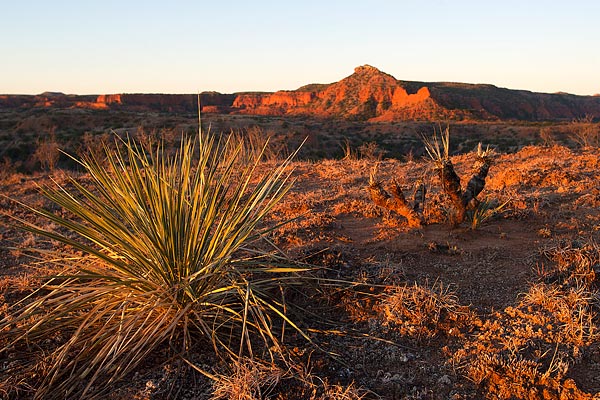
Although the barren Llano Estacado of the Texas Panhandle fell
outside the Military District of the Pecos, soldiers from Fort Concho
had the additional responsibility of maintaining order in this dry
and empty country.


This degrading of non-combatants took place during Ranald Mackenzie's command of Fort Concho.  Described by Ulysses S Grant as the "most promising young officer" in the Union Army during the Civil War, Mackenzie was a harsh disciplinarian (called the "Perpetual Punisher" by men serving under him) who did not have the love of his troops.  In late September 1872, Mackenzie ordered soldiers to attack a Comanche camp that showed no sign of immediate hostility.  Twenty-three Native men died, unprepared to defend themselves.  Their wives and children, herded to Fort Concho, spent the winter in and outdoor pen.  In the spring, all were shipped to the Oklahoma Territory to enjoy the Great White Father's hospitality at a reservation near Fort Sill...


[Mackenzie, incidentally, provoked an international incident in 1873 when his men rode across the Rio Grande into Mexico in pursuit of Lipan Apache and Kickapoo raiders.]


Victorio proved to be the last major challenge of the Indian Wars for Fort Concho and its soldiers.  As a young man, he rode with Geronimo and Mangas Colorado, two of the Apache Nation's greatest warriors.  After Mangas Colorado died in 1863, Victorio slowly assumed leadership of a band of about 300 Chiricahua and Mescalero Apaches.  With no real desire for continued and ultimately futile bloodshed, Victorio moved his people in 1869 to a location near Fort Craig, New Mexico, to await completion of the reservation at Ojo Caliente...
Victorio


Apache willingness to submit to changing times ended in 1877 when the United States government ordered Victorio and his people moved to Arizona.  Protests by the Indians that their crops weren't ready for harvest were ignored.  Despite the hardship imposed, the Apaches relocated.  Conditions at the new reservation were extremely unpleasant and Victorio decided that enough was enough.  For three years, his band waged war in the deserts of New Mexico, West Texas, and Mexico...


Hearing reports in August 1880 that Victorio and his warriors had ridden across the Rio Grande once again and were now camped in the Guadalupe Mountains of Far West Texas, Colonel Grierson and his Tenth U S Cavalry Buffalo Soldiers headed west.  Black men from Fort Concho and the red men led by Victorio met in the Sierra Diablo range and then again at Rattlesnake Springs.  Grierson's troops prevailed after a three hour battle.  Victorio's band headed back to Mexico where they died in a confrontation with Mexican soldiers on October 15, 1880...


Exploring and mapping West Texas were, as noted previously, a key part of the Fort Concho mission...
Detail from Stylle Read's Military Heritage mural in downtown
San Angelo depicts a Buffalo Soldier patrolling the West Texas
desert country west of the city.


In 1875, William Rufus Shafter (one wonders if he was named for that wicked son of William the Conqueror so hated by the Church) and his men hunted for Indians in the barren Llano Estacado of the western Texas Panhandle.  In doing so, they came to know the area topography and the locations of its scarce water supplies, details of which were included in Shafter's official report.  His account encouraged settlement in the Panhandle through his descriptions of endless grasslands and countless bison...


Pioneers moving to the area obviously glossed over Shafter's mention of the extreme trouble he and his men had locating water.  On one occasion, the 450 men under his command rode for forty hours in hopes of reaching the Pecos River before thirst and summer heat killed them.  This desperate bid for survival earned Shafter a nickname:  Pecos Bill...


An earlier posting in this blog discussed how the search for relatively quick land routes across the Southwest took on a new importance in the aftermath of the California Gold Rush.  One expedition, tasked with determining the practicality of an "upper road" from San Antonio to El Paso through the Concho Valley, traveled the distance between the two cities from June 19, 1849 to July 29, 1849... 

Paisano Pete, the world's largest sculpted roadrunner, greets
visitors to contemporary Fort Stockton, Texas.

Its leader, Lieutenant Francis T Bryan, reported, in the words of historian J B Burnett writing in his 1970 Trans-Pecos Texas: A Study of Exploration, "that except for the dry region between the head of the Concho and the Pecos River, the route offered easy passage for wagons"...


Hardy Anglo-Saxon men and sturdy Anglo-Saxon women venturing into the western Concho Valley in late 1880 had little to fear from either Victorio or his men... 
Untold ages ago, a meteor struck the earth in what would become
the creosote flats dry country near Fort Stock.  The mountains in
the background of this photograph are at the rim of the impact area.


Colonel Grierson and his Buffalo Soldiers had accomplished their mission well.  They,  mayhap, encountered an occasional camel-- there were reported sightings of them in the desert country until around 1900.  But they surely saw no bison.  Even before the herds had been slaughtered to near extinction, the magnificent animals did not range south of the Twin Mountains near San Angelo and were total strangers to the Trans-Pecos if State Geologist S B Buckley reported accurately in his 1876 report to Texas legislators...


But, as the endless wind whipped across the hot and dry country, perhaps one or two of these hardy Anglo-Saxon men and sturdy Anglo-Saxon women saw the proud ghosts or heard the lost voices of the proud Jumanos and Apaches and Comanches who traveled the vast southwest Texas despoblados before them...

 
Future Confederate States of America President Jefferson
Davis envisioned a Camel Corps to facilitate exploration of
the American Southwest in the days before the Civil War
when he was Secretary of War for the United States.


THE MARKETPLACE

One very easy and inexpensive way to build a collection of work by some of today's finest painters, sculptors, and photographers:  Greeting cards from Fine Art America. 

Even easier: browse the Louis R Nugent gallery at Fine Art America.  Choose from 250+ unique ideas for home and office decor or holiday and birthday cards for yourself or a special someone who deserves something extraordinary.  Individual cards cost less than $5.  Wall prints from $22.


Follow and Like Louis R Nugent Photography on Facebook @ louisnugent22.


Fine Art America now features painting, drawings, and photographs by nineteen artists who celebrate the majestic and uncompromising landscapes, settlements, people, plants, and animals of West Texas.


Fine Arts America now features  work celebrating the mysterious and lovely Bayou State of Louisiana and its unique lifestyle:

http://fineartamerica.com/groups/cajun-country-louisiana.html


CREDITS

Note: All photographs for this essay were located through Google Images or Wikipedia, without authoritative source or ownership information except as noted: Fort Davis from nps.gov; Henry O Flipper from vitia.org, Benjamin Grierson tracking Victorio, Lipan Apache camp, and Victorio from texasbeyondhistory.net; Sierra Madera astrobleme near Fort Stockton from geologyabout.com; Camel Packtrain from thesocietypages.org; Caprock Sunrise from Texas Parks and Wildlife

Thursday, December 20, 2012

HAPPY NEW YEAR!


LRNArts Blog is taking a long-awaited holiday vacation but will return January 11, 2013, barring any delays in travel...

Greeting Card, Anonymous, circa 1925
 

Many thanks to my readers for their continuing support.  As of this writing, the blog has attracted visitors from over 90 nations.  This response has made the work which goes into the blog a labor of love...


Come January, we shall continue our explorations of art, pop culture, history, science...


We end the year with some photographs of the dry country in which I live.  My hope is that you enjoy them.  It is a hard land but is filled with beauty for those who take time to explore it...


And my prayer is that the year 2013 of the Common Era brings for each of you and all those whom you love, gifts of peace, love, health, prosperity, wisdom, and joy...

Phyrne Before The Judges, Albert Wein, 1948


THE MARKETPLACE


One very easy and inexpensive way to build a collection of work by some of today's finest painters, sculptors, and photographers:  Greeting cards from Fine Art America. 

Even easier: browse the Louis Nugent gallery at Fine Art America.  Choose from 250+ unique ideas for home and office decor or holiday and birthday cards for yourself or a special someone who deserves something extraordinary.  Individual cards cost less than $5.  Wall prints from $22.


Almost, Louis Nugent
 

Follow and Like Louis R Nugent Photography on Facebook @ louisnugent22.


Fine Art America now features painting, drawings, and photographs by 17 artists who celebrate the majestic and uncompromising landscapes, settlements, people, plants, and animals of West Texas.  Featured this week:


Fine Arts America now features  work celebrating the mysterious and lovely Bayou State of Louisiana and its unique lifestyle:


CREDITS

Note: All photographs for this essay were located through Google Images or Wikipedia, without authoritative source or ownership information except as noted:  Anonymous Greeting Card, circa 1925, from Art Deco Graphics by Patricia Frantz Kery, New York, 2002.  Phryne Before The Judges by Albert Wein from ossining.org. All other photography by Louis R Nugent.

Thursday, December 13, 2012

BIRTH OF A PITCHMAN

"And out there in the night they listen.  Lying in bed, curled in a chair, driving a car, swinging on a porch-- in every likely and unlikely place-- the restless, the workers, the insomniacs, or just the 'night people,' wonder who will bring another fantasy to entertain them during the sleeping hours...."-- John Nebel, The Way Out World, 1961


Long John Nebel-- a man with a carnie's eye for an easy mark and a child's sense of wonder-- one of the most influential people in my life...


He paved the way for the Larry Kings and Art Bells of today, this 6' 4" man born John Zimmerman in Chicago in 1911.  His heaviest day on the bathroom scale saw the red needle pointing at 160 lbs.  He dropped out of school in the eighth grade.  But, being who he was, JZ had already become an avid reader who loved learning about almost everything under the sun almost as much as he loved learning how to pull off a con before he pulled it off...   
Flying Saucer contactee George Adamski (left) elucidates the finer points of
the utopian outer-space lifestyle led by his friend Orthon of Venus whom he
met one wintry day in the Mojave Desert.  A skeptical John Nebel holds up a
clearly authentic photograph of the Venusian mothership.


One biographer dubbed him "radio talk king, master salesman, magnificent charlatan"...


He married one of 1940s America's famous fashion models, Candy Jones, nee Jessica Arline Wilcox of Wilkes-Barre, Pennsylvania.  Just a few months after their marriage on New Year's Eve, 1972, gabfest master Nebel came to believe his beloved wife was one of many victims of Project MKUltra, a sinister CIA mind-control project... 


By his own account, which should be viewed with affectionate suspicion, he found his way to New York around 1930.  In the introduction to his 1961 book, The Way Out World, Nebel had no real complaints about his childhood as the son of an advertising executive (Dad) and a dermatologist (Mom).  Life, he writes, was pretty good-- all the chocolate creams a kid could want without paying for it with pesky pimples...
A series of hypnotic sessions aimed at
shedding on light on the causes of mood
swings in Nebel's wife led the radio host
to believe she'd been part of a CIA
mind-control experiment.


Without explaining why to the reader, other than hinting he may have gotten in trouble for peddling stolen firecrackers, young John found himself shipped off to live with his grandparents in the metropolis of Wisconsin Dells.  Grandma was the president of the local Women's Christian Temperance Union.  Grandpa was a man who appreciated a good card game, cheap cigars, a shapely floozy, and properly distilled vegetation...


In the summer of his fourteenth year, the circus came to Wisconsin Dells...


Nebel's account of how young John Zimmerman eventually became John Nebel has it that one of the clowns took sick and that JZ, tall for his age and a smooth talker, talked the circus' owner into letting him fill in for the ailing funny man.  The clown stayed sick. John agreed to play the next show date in nearby Baraboo after getting the OK from Mom and Dad back home in Chicago.  His father gave him permission to spend two weeks with the circus.  John conveniently forgot when fourteen days had passed...
The circus came to town during young John Zimmerman's summer visit with
Grandma and Grandpa in Wisconsin Dells.  And then he met Lady Ester...


At the end of the summer, the eagle-eyed adolescent knew three things:  he loved show business, psychic phenomena and the occult world fascinated him (for reasons we shall see in a few paragraphs), and that selling was the greatest form of self-expression in the world...


Many years later, John Zimmerman transformed himself into John Nebel, an erstwhile Paramount Theater usher and New York City sidewalk salesman and auction house owner who'd approached the Big Apple's WOR radio station with a pitch for a late night interview program devoted to, as Nebel biographer Donald Bain put it, "discussing strange and unusual topics".  For Long John, the idea was a win-win proposition.  He'd hawk his auction business AND get paid a few extra bucks in the process.  The station management wasn't overly keen on the idea but decided it had little to lose.  WOR's ratings were in the tank and the station surely couldn't lose any more ad revenue than it was already losing in the 12 Midnight to 5:30 AM slot...


To everyone's great surprise, including Long John Nebel's,  his graveyard shift gabfest hooked almost every night owl within clear channel WOR's considerable range...
The circus life gave John Nebel three things-- a love of show business, a life-
long fascination with the strange and unusual, and a belief that selling was the
ultimate way of expressing himself.


[Exactly how popular was his late night talk show?  WNBC reportedly offered Long John a yearly salary of $100,000 to sign on after he left rival WOR in 1961.  Industry analysts believe this was one of the highest paychecks offered to a radio personality at the time.]


Why did they listen?...


Nebel's account of his years at WOR gives us a hint (and a good reason to revisit Long John and his show in future blog entries) with chapter titles like "Saturnian Lovers And Venusian Mistresses", "The $20,000,000 Ticket To The Moon Plus Some Impossible Inventions", "Edgar Cayce, Psychic Doctor, And John R Brinkley, King Of The Quacks", "Deros, Devils, And Snowmen"...


If you were bored, and it was 2 AM, what better way to while away the sleepless hours than hear Orfeo Angelucci weave his tale of his chance meeting with a dying physician named "Adam" in a nearly empty restaurant in Twenty Nine Palms, California, and the five-inch tall blonde, scantily clad, who materialized inside a glass filled with a fine but "very rare" champagne from Adam's home planet and danced in a frenzy until she had exhausted herself and disappeared as mysteriously as she'd appeared...
Long John Nebel-- Auctioneer Extraordinaire-- plugging
"The Value Center of New Jersey"


One suspects Long John became enamored of the world of the strange and bizarre, at least in part, due to a youthful crush on his fellow circus performer, 'The Lady Ester'...


We'll just let Long John tell us the story himself as he takes us back to the first time he heard the circus barker make his pitch for the hard-earned nickels and dimes of good hearted but easily fleeced backwoods rubes...


"Ladies and gentlemen.  I'd appreciate it if you'll now gather over to this platform.  Thank you.  Will you be kind enough, please, to move in a little closer.  Those ladies over there, would you please move in just a little closer.  It is a rare privilege and a great honor for the Lamont Brothers to have this season, as our star attraction, Lady Ester.  Lady Ester can read your mind without the aid of any mechanical or electrical equipment, or personal contact.
Andy Sinatra, The Mystic Barber, communicated with
folks on other planets by way of his home-made headband.


"She was the seventh born in a family of seven children.  She was born on the 31st day of October-- a day that we celebrate as Halloween.  At the age of seven, Lady Ester was able to answer her mother's questions and execute her mother's desires prior to the time they were orally stated.  At the age of fourteen, she had completed her high school education.  On her graduation day, she was giving the valedictory speech when all of a sudden she stopped.  For a period of time that seemed hours but evidently was just a matter of seconds, there was complete silence in that high school auditorium in Ashtabula, Ohio...


"Members of the audience began feeling sorry for this little youngster who evidently had forgotten the rest of her speech.  And just then little Ester said, in a quivering faint voice, 'There's a bad wreck that's going to happen at the railroad crossing in a few minutes'...


"A blanket of silence covered the auditorium.  In the distance could be heard the roar of an oncoming train"...
Nebel guest Orfeo Angelucci began to suspect his
acquaintance Dr Adam wasn't from around here when
a five-inch blonde, quite scantily clad, appeared out
of thin air and began dancing in a champagne glass.


Of course it happened!  Dear readers, don't waste your time looking for records of that tragic incident in Ashtabula, Ohio.  They were destroyed in a tragic fire that took place many years ago.  Step right up, Ladies and Gentlemen, for just a few more minutes of your time at some point in the next few weeks, we'll learn who Lady Ester really was and what happened when a young Long John Nebel found himself standing in front of the same judge three times on one cold day after the Great Stock Market Crash...


But for just two quarters, half of a dollar, my good friends, I'll see to it you get the best seat in the house.  Perhaps Lady Ester, who so accurately and uncannily predicted the most tragic event in the annals of a lovely Ohio town, will take notice of you and speak of the many wonderful things yet to come in your life.  Who knows?  Love and fortune may be waiting just around the corner.  Just two quarters, ladies and gentlemen, yes-- you heard me right, friends-- a mere half dollar...   

 
Candy Jones in her 1940s super-model and
USO entertainer days.


THE MARKETPLACE

One very easy and inexpensive way to build a collection of work by some of today's finest painters, sculptors, and photographers:  Greeting cards from Fine Art America. 

Even easier: browse the Louis Nugent gallery at Fine Art America.  Choose from 250+ unique ideas for home and office decor or holiday and birthday cards for yourself or a special someone who deserves something extraordinary.  Individual cards cost less than $5.  Wall prints from $22.


Follow and Like Louis R Nugent Photography on Facebook @ louisnugent22.

 
Fine Art America now features painting, drawings, and photographs by 17 artists who celebrate the majestic and uncompromising landscapes, settlements, people, plants, and animals of West Texas.

http://fineartamerica.com/groups/west-texas.html

 
Fine Arts America now features  work celebrating the mysterious and lovely Bayou State of Louisiana and its unique lifestyle:


CREDITS

Note: All photographs for this essay were located through Google Images or Wikipedia, without authoritative source or ownership information except as noted:  John Nebel with George Adamski from obscurantist.com; Long John Nebel Auction House ad from songpoemmusic.com; Long John Nebel Presents The Flying Saucer Story from tower.com; Wisconsin Dells photo from wisconsinlakes.com; Circus Comes To Town from yesterdaystowns.blogspot.com., Orfeo Angelucci book jacket from radiantebooks.net   Lady Ester story quoted from The Way Out World, John Nebel, New York, 1961

Thursday, December 6, 2012

ANOTHER HOLIDAY TIME IN THE DESERT


Not quite a year ago, when the LRNArts blog was in its infancy, we took a tour of the holiday preparations going on around San Angelo...

We still don't have any dreidel spinning contests in this part of West Texas, a sad fact noted in last year's ode to winter celebrations...

This year we revisit the Santa Fe Railroad depot and its wreath-bedecked engine sitting idly under an icy-blue desert sky... 


Our next stop is the Tom Green County Courthouse early one Sunday morning to view the Nativity Scene gracing its lawn.  Pesky ideas about separation of church and state don't hold much water in these parts, pardner...

 
Local merchants celebrate the season with outdoor displays, too, or fill their windows with holiday cheer.  They are private businesses and even the old Ebenezer Scrooge would have no real right to complain about their right to spend their funds as they see fit.  Near the entrance to Eggemeyer's General Store, a lamb peeks through slats in a makeshift manger at three wise dudes shlepping from the east...

 
Snow doesn't fall often in this part of the desert.  But it did on one long ago Christmas when poor Santa's reindeer had the flu and he had to don a ten gallon cowboy hat and ride his trusty steed, Tarbush Tom, over the cactus-studded plains to make sure all the good little boys of the Concho Valley awoke to stockings filled with licorice and shiny Indian Head pennies...


And there are elegant mannequins in store windows...


Not to be outdone, Pearl the Mermaid proves she can look just as fancy in a Christmas cap as any snooty uptown lady...


Locals know the start of the holiday season has nothing to do with Black Friday or even national chains putting up trees and playing Jingle Bells over store intercoms right after the Fourth of July fireworks show.  It really begins when two and half miles of Concho River banks downtown are lit up by over three million lights.  Visitors from across Texas and 27 states saw the lights last year.  A pedestrian crossing the bridge near the Visitor Center could see scenes from the Twelve Days of Christmas greeting the morning sun at dawn on another lovely West Texas desert day...     


THE MARKETPLACE:

One very easy and inexpensive way to build a collection of work by some of today's finest painters, sculptors, and photographers:  Greeting cards from Fine Art America. 

Even easier: browse the Louis Nugent gallery at Fine Art America.  Choose from 250+ unique ideas for home and office decor or holiday and birthday cards for yourself or a special someone who deserves something extraordinary.  Individual cards cost less than $5.  Wall prints from $22.
Louis Nugent: Electric Triangles


Follow and Like Louis R Nugent Photography on Facebook @ louisnugent22.

Fine Art America now features painting, drawings, and photographs by 17 artists who celebrate majestic and uncompromising landscapes, settlements, people, plants, and animals of West Texas.


Fine Arts America now features  work celebrating the mysterious and lovely Bayou State of Louisiana and its unique lifestyle:

http://fineartamerica.com/groups/cajun-country-louisiana.html


CREDITS

Note: All photographs for this essay were located through Google Images or Wikipedia, without authoritative source or ownership information except as noted: all photographs by Louis R Nugent.